Archive for the ‘Uncategorized’ Category
With another couple of days until our flight to Thailand and some time on the beach we decided to strike out on our own, without joining a tour (yes kids we’re just that crazy) and head to see Tam Coc, the so-called “Ha Long Bay of the rice paddies”. Despite being told by the staff at our hostel that you can’t get to Ninh Binh, the closest town to Tam Coc unless you’re part of a tour, we bravely set forth to the bus station.
Upon arrival at the bus station, I’d barely even got my pack out of the cab when a guy came up to me, beckoning me to follow while repeating “Ninh Binh” over and over. “How the hell does he know where we want to go?” I thought, but then of course you get suspicious, especially when another two or three people approached us all beckoning us to follow them and saying the same thing. That’s one thing I’ve got quite tired of while traveling – you have to be on your guard all the time and assume that the first price that you hear isn’t reasonable because more often than not someone is trying to take you for a ride. I don’t like to have to think the worst of people all the time, but that friendly cab driver who asks if you’ve got a reservation at the hotel you’ve asked him to take you to isn’t concerned for you, but more likely to be trying to take you to a hotel of a friend of is where you’ll pay through the nose for a sub standard room. That random “friend” of the cabbie that just got in and says he’s a student and is just getting a lift home, is actually working for another hotel scam. That bottle of water doesn’t really cost $2, that tuk tuk ride to your hotel won’t really take 10 minutes so that price is too high. And on and on. It’s not something that I think I can ever get used to, but I digress.
Our very persistent friend took us through to the ticket counter which is the same counter for all the buses so we couldn’t really see the scam, especially when the tickets turned out to be the price that we were expecting. We can only think that a number of small companies ply the same route so they have touts at the station to try to get you on their bus rather than someone else’s because he was on and off the bus constantly, both in the bus station and also once we got on the road, each time beckoning to other people (all local) who would join the bus. Sitting at the back of the bus on slightly raised seats with zero leg room, (even my knees touched the seat in front) I really noticed our blondness and our fellow passengers kept turning round to get a good look – it was a little like being monkeys in the zoo.
Arriving in Ninh Binh after probably the least comfortable journey on our travels courtesy of our seats at the back and the fact that our chosen vehicle had zero suspension, we were greeted by a fairly characterless town with practically no tourists. We found the hotel we were going to stay in, confirmed we could hire a motorbike the next day and then set off to see what Ninh Binh was about. While there weren’t the restaurants and cafes etc that we’ve been used to, it was a pleasant change to be in a city that isn’t set up for tourists. We walked around the streets for a bit and then through the local market that basically sold everything from food to kitchen appliances to clothes, everything we would usually find in a supermarket at home. All around us life went on, catering to the locals and unaware of tourist dollars.
The next day we were up bright and early, in possession of our little scooter for the day and a hand drawn map courtesy of our hotel and off we went. I should have known from looking at the map where a road marked 4km was the same length as a road marked 8km, that it wasn’t going to be the most accurate of guides. It probably took us an hour longer than it should have done to find Tam Coc as we were, on the advice of our hotel, trying to stick to back roads instead of braving the insanity of highway one but the turnings we were looking for just never seemed to materialise. In the end we admitted defeat and went the main road way, thankfully living to tell the tale.
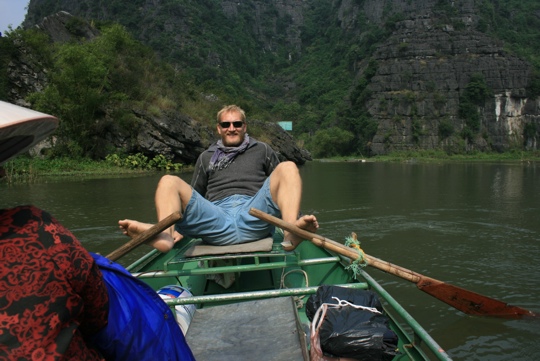
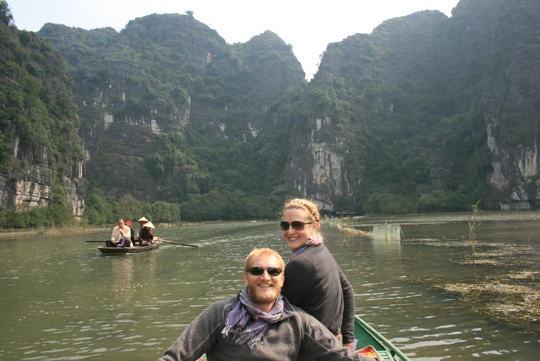
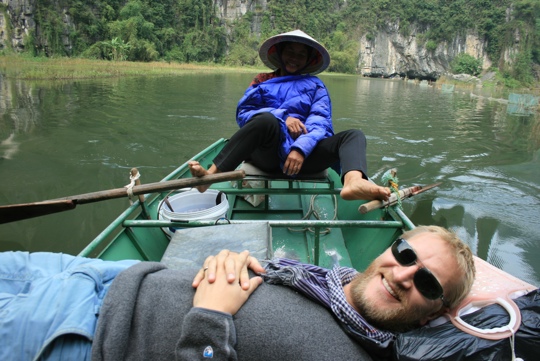
The way to see Tam Coc is via boat which is rowed by a local person using their feet! We were marveling at their dexterity and decided that we should really give it a go ourselves. As is to be expected I think, neither of us are naturally gifted in the foot-rowing department and the pictures of me having a go are not in the least ladylike so I certainly won’t be sharing them here.
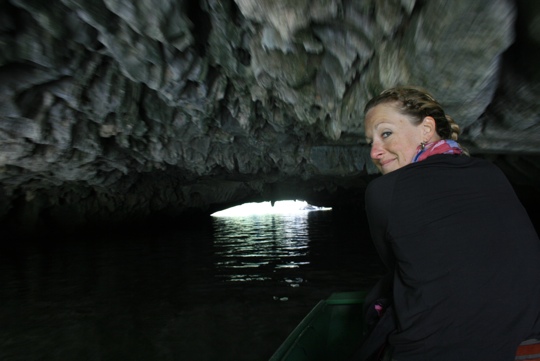
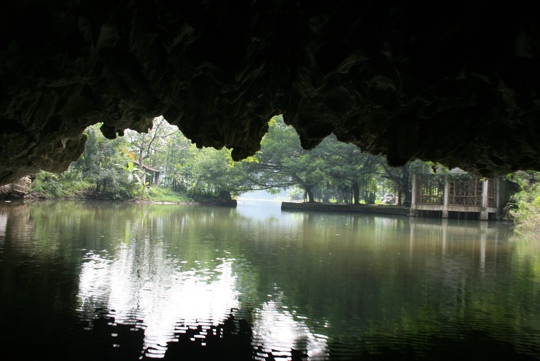
The scenery of Tam Coc is breathtaking. We had a couple of people doubt whether it was worth going to see it after we’d already seen Ha Long Bay but to me that’s like saying it’s not worth going to the Alps if you’ve been to the Rockies. We had got there early in the morning so that we missed the crowds of day trippers from Hanoi so we rowed peacefully along the river while on either side people were preparing the rice paddies for the next crop. You even get to go under some of the immense limestone kasks through caves, dodging stalactites while your comedy (and devilishly handsome) boat buddy calls a sinister “Mwa ha ha ha ha” which reverberates around you. One guess people.
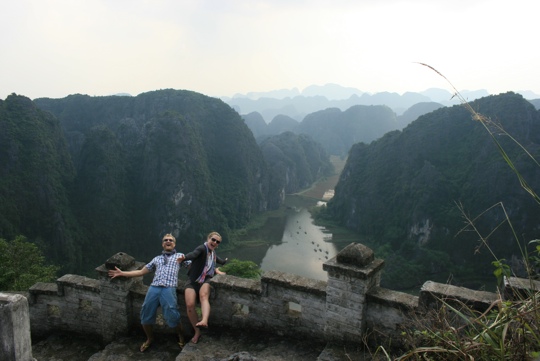
After the boat trip we headed for a nearby pagoda, though upon arrival it was clear that I wasn’t dressed for the occasion in my shorts so I had to let Clive go on ahead. Apart from some scrambling to get to the top for a viewpoint it doesn’t sound like I missed much, but fortunately there was another monument nearby that you could climb up to and gave a panoramic view of the route that we’d followed in the boat. Definitely worth the puffing and blowing it took to get to the top. Side note: apparently eating and drinking for four months and no exercise is detrimental to your stamina. Now we know.
After checking out the view we headed back to our digs and on back to Hanoi, for one more night’s sleep before hitting Thailand for some well deserved (I’m sure you’ll all agree) R and R on the beach 😀





We left Hoi An just as the rains really set in and it was probably lucky that we did as the road leading to the town was already under some serious standing water and I felt really bad for the cyclists that our driver mercilessly sprayed as we went past.
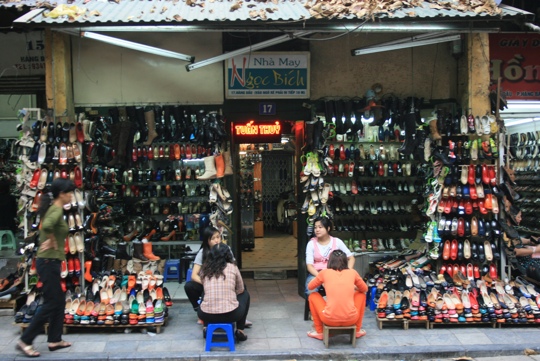
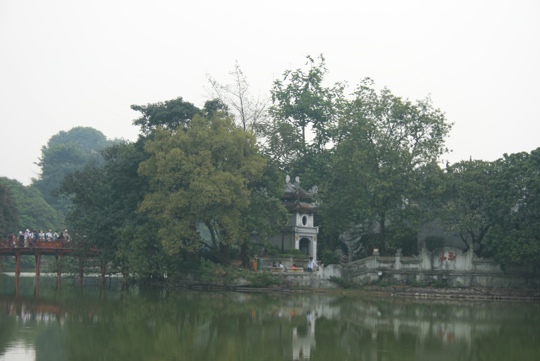
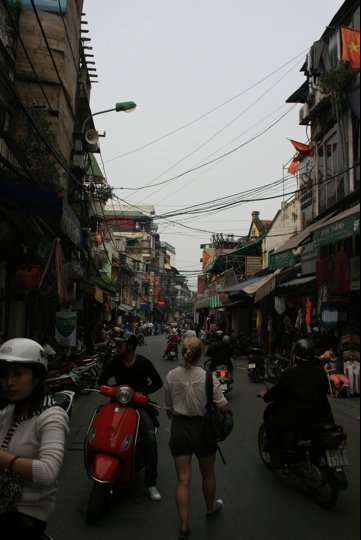
Hanoi is a much smaller city than Saigon, only 3.7 million to Saigon’s 7 million and I immediately liked it more, especially because it didn’t have nearly as many 4 lane roads to navigate while scooters buzzed you like angry bees. We based ourselves in the old quarter where the streets are narrow and bustling with street vendors and places serving bia hoi (draught beer) for pennies. This was far more the Asian city that I’d imagined and even had the added bonus of a number of lakes where you can walk uninterrupted by traffic.
One of the big attractions in Hanoi is the Ho Chi Minh Mausoleum, where you can visit the embalmed corpse of the man himself – fun! Sadly for us though we’d arrived just after he’d gone to Russia for his annual “maintenance” – bummer.
Our main reason for heading to Hanoi was that it is the gateway to Ha Long Bay and Sapa so our focus was on finding trips to these places that would fit into the few days that we had before our trip to Thailand to hopefully hunt down some sun.
We had a recommendation from our friends Gareth and Leora in Canada for a Sapa trip that they did through the Hanoi Backpackers hostel so we dutifully headed off to investigate. I have to admit that I was a little reticent to book a trip through a hostel especially when their Ha Long Bay trip promised to “rock long, rock hard” and included drinking games and nude midnight swims. Yes, the thought of spending 3 days on a boat with a bunch of drunk 20 year olds fills me with horror – if that makes me old, I can live with it. However, we reasoned that a walking trip to Sapa that included a homestay with a local family probably wouldn’t interest the beer pong and shooters brigade so we signed up.
We turned up at the hostel at 7.30pm as directed and were escorted to the train station where we were to catch the night train. We had already been looking at cabins on the night train before we opted for the all-inclusive trip and had seen some really nice ones, so the bunks were a bit of a disappointment, very basic and a squat loo (something I most certainly will NOT miss when we leave Asia) but seeing as we were literally just sleeping on the train, I managed to avoid being a princess about it and just suck it up.
We arrived in Lao Cai at about 5am and the first issue was the fact that there was nobody holding a sign with our names on it as there was supposed to be. You know that feeling as everyone else is being ushered into their transport, the crowd is thinning and still you’re standing there without a clue as to what is going to happen next? Yes? That was us at 5am. Bleugh. Fortunately a guy who seemed to be in charge saw our Hanoi Backpackers envelope and got us into a bus that delivered us to Sapa where finally we saw Joaneruge written on a sign – imagine the relief!
As we drove the 35km on winding mountain roads the dawn was just breaking and gradually the mountains and their rice terraces were revealed to us. I hadn’t realised until that moment just how much I’d missed being in the mountains and was looking forward to the trek.
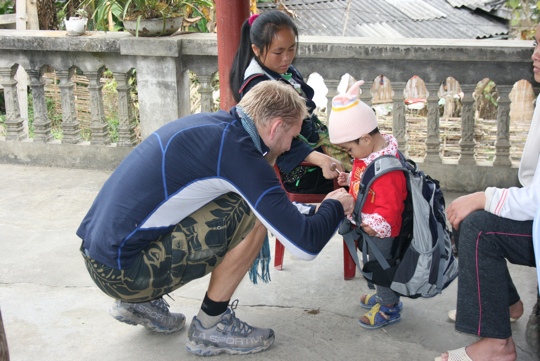
After a shower and breakfast we met the rest of our group, 2 Aussies, 2 Danish, 2 Norwegians, a German and our guide, a tiny little 17 year old local girl and headed off. We hadn’t got more than 10m before we were accosted by a group of local women in traditional costume carrying wicker baskets on their backs who became our chaperones for the morning. Basically they walk with you for a couple of hours and help you if you need it and then try to sell you things that they have made when you get to your destination. This cycle repeats itself in the afternoon with a new group of women and again the next morning, so it does become a bit tiresome.
The trek itself wasn’t exactly difficult and was more like a gentle stroll in the countryside. Once I’d realised this and changed my expectations of the trip (I’d been expecting it to be more like a proper hike as we’d done for the Gibbons) I could enjoy the spectacular scenery and the fact that we were finally out in the fresh air.
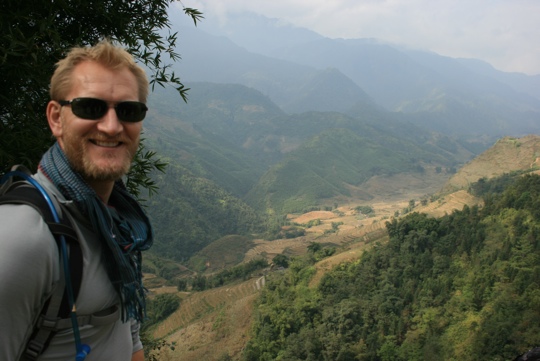
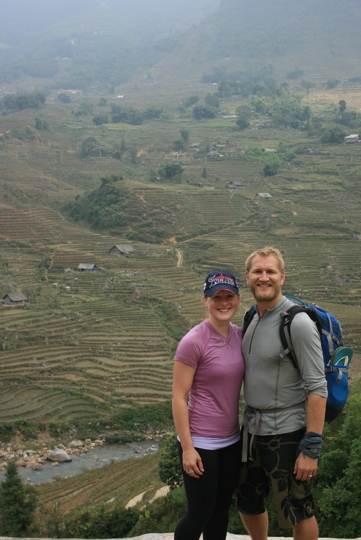
The town of Sapa lies at an altitude of 1600m and is part of the Hoang Lien Son range of mountains that forms the eastern extremity of the Himalayas. The range includes Vietnam’s highest mountain, Fan Si Pan, at a height of 3142m above sea level. The scenery was nothing like we’ve seen so far in Asia – instead of being deep in jungle we were on the side of a mountain with vistas to go with it and wonderful fresh air to breathe. The terracing on the sides of the mountains is spectacular, even after the harvest when it’s all brown instead of the lush green that you associate with rice paddies.
Our home for the night was a village in the valley that a local family live in but is set up with lots of extra beds for tour groups just like ours. I wasn’t expecting the level of comfort that we ended up with – a double bed with thick, warm blankets and a mosquito net and privacy curtain – as this is nothing like what the locals actually have themselves, as evidenced by our guides house that we visited on the way, which seemed to have only one large bed for a number of people, including the girl and her husband (yes, married at 17) and her sister and kids. Clearly set up specifically for the soft tourists.
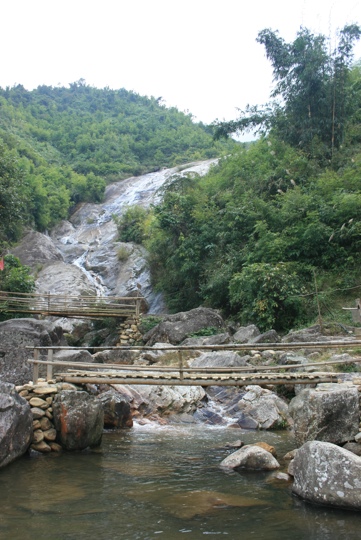
After a delicious breakfast of pancakes the next morning we set off to cross the valley and visit a waterfall before being picked up on the other side and taken back to town. It was a short trip, but a good one and yet again we were thankful for an interesting group of people to share it with. Oh and I should of course mention that Clive managed to find some partners in crime (the Aussies of course) who willingly followed him up the waterfall and over an Indiana Jones style suspension bridge which was accessed through almost impenetrable brush (I say almost) and closed off with barbed wire. But since when has that been enough to deter him?
We returned to Hanoi for a day before heading out to Ha Long Bay for a night and sampled some more delicious Vietnamese food and also caught our first glimpse of anything Christmassy – one small block in the old quarter seems to be dedicated to Christmas decorations. Most odd when you’re still in shorts.
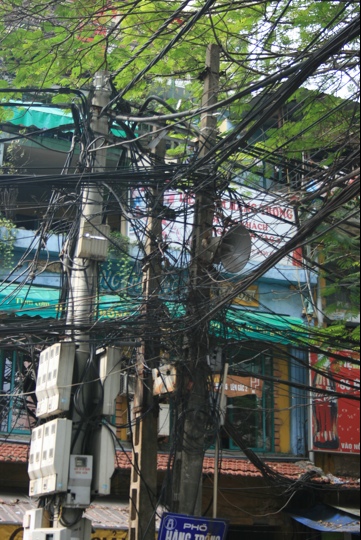
We also took a couple of pics of scaffold and electrical wires. Odd? Us? Check out below.








We arrived in Hoi An and immediately relaxed. A city of just over 70,000 instead of 7 million, low rise replaced high rise and even though the driving didn’t improve, crossing the road with some level of decorum was possible as the number of scooters hurtling towards us was massively reduced.
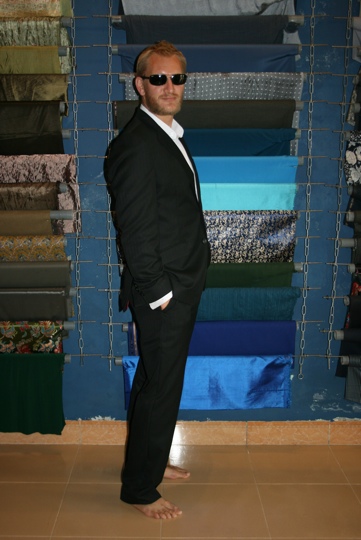
We had come to Hoi An for two main reasons – food and clothes. My two main reasons to do anything really. But it wasn’t me that ended up the centre of attention, instead that role fell to the Bolt. We decided that he needed a new suit because the only black suit he has he bought for $100 so you can imagine what that looks like, even after another $100 worth of tailoring.
There are over 400 tailors in Hoi An so the choice is overwhelming and the prices differ enormously – you could pay as little as $80 for a full suit and up to $400 – with commissions being hidden in the costs if you’re referred from hotels etc and some tailors jacking up the prices because they’ve earned a good reputation over the years. We did our research on sites like Trip Advisor and ended up going to Wall St Tailors and were thrilled with the results. After an initial meeting where fabrics and styles were chosen and measurements taken we went back just the next day for our first fittings (I did get a suit jacket and tailored white shirt as well – can’t let Clive have all the fun!). I think we had 3 fittings in total, paid less than $400 and walked away with one full suit and six work shirts for Clive and a jacket and shirt for me – bargain!
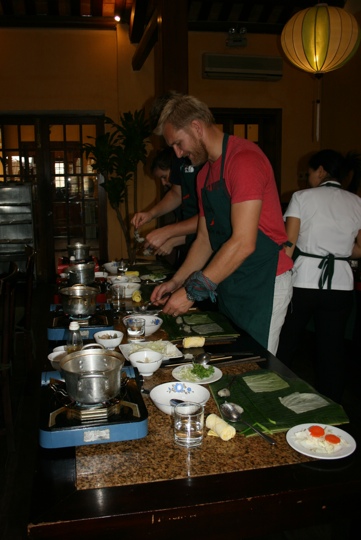
The other thing that drew us to Hoi An was the food as I’d mentioned and it didn’t disappoint. We had everything from authentic Vietnamese to chocolate brownie cheesecake and it was all to die for. We also finally got around to doing a cooking course and I’m thrilled that we kept it for Vietnam because I definitely think it has the most interesting cuisine of the countries that we’ve been to on this trip. Although, most “out there” dish has to go to Cambodia where I saw a recipe for fried tarantantulas, the first step being, “kill the tarantula by pressing down hard on the body with the heel of your hand and remove the fangs” – riiiiiiiight.
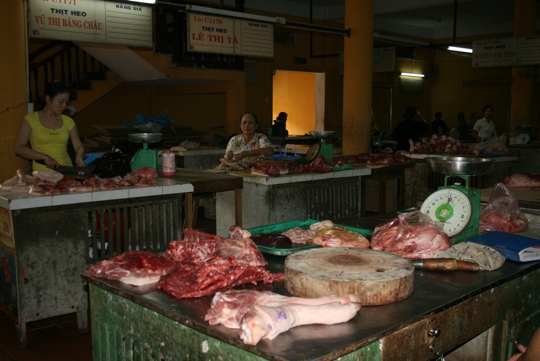
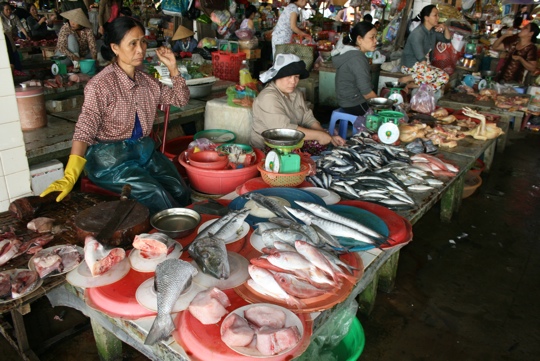
Our cooking course started with a tour of the market in Hoi An which is a site to behold, with the meat and fish areas being the most remarkable to a Westerner as everything is just displayed on slabs with no refrigeration and no covers and everyone seems to have their hands on it – slightly different to back home! We then headed back to the “Morning Glory” restaurant where we were doing our course. Side note; for those with their minds in the gutter, morning glory is a vegetable.
Our teacher for the day was a 31 year old woman who had already been working in the restaurant for 17 years. She was awesome and delighted in telling us stories about her mother-in-law, who she had been living with for the last year as tradition dictates in Vietnam that you do this after you get married. Cooking for the mother-in-law is a big deal in Vietnam and helps to decide whether she’s going to approve the marriage – lucky it’s not like that in the West!
Our menu for the morning was:
– Clear soup with prawn dumplings
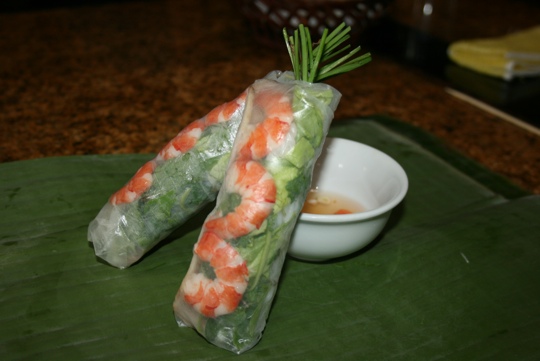
– Fresh spring roll
– Crispy prawn and pork pancake
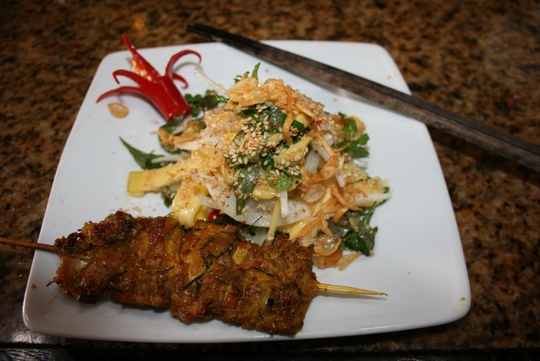
– Marinaded, grilled chicken
– Mango salad
Everything was delicious and some of it even looked like it was supposed to look!
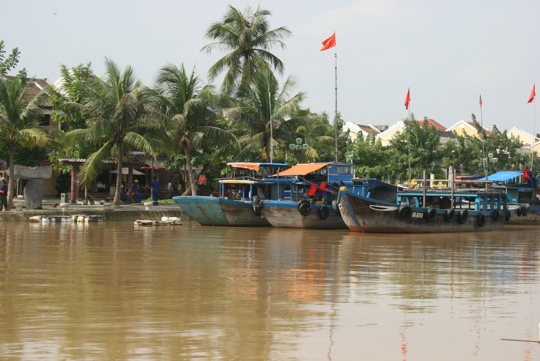
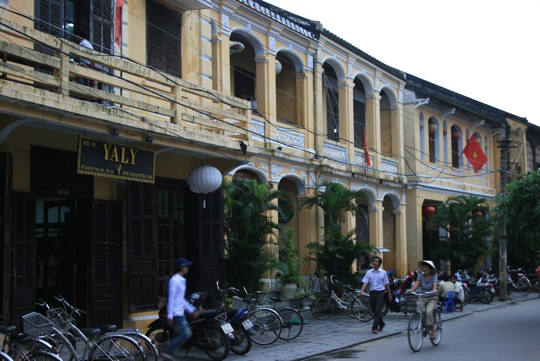
The rest of our time in Hoi An, when not at the tailors, dining in the various restaurants or eating the delicious street food, was spent chilling out and wandering around the lovely town or cycling around the streets. It reminded us a lot of Luang Prabang in Laos with the same laid back vibe and colonial architecture. Clearly something we’re both drawn to.





Our main reason for visiting Saigon was to visit the Cu Chi tunnels where the Vietcong hid out during the war and mounted a very successful opposition to the forces of the South and the USA. Our visit to the tunnels was preceded by a visit to the War Remnants Museum which was quite a harrowing experience.
The museum showed us yet another chapter in humanity’s history of doing evil to each other. This was a rendering of the Vietnam War that was told from the point of view of the Vietnamese, which isn’t one you’re really exposed to growing up in the West. The level of anti-US propaganda is very high here but even if you take a giant cellar of salt with everything you read there has to be some truth there.
Phu Quoc island according to our guidebook is everything that a tropical island should be, fringed with white sand beaches, lined with swaying palms and gently lapping turquoise waters. But it was also home to one of the big prisons used in the Vietnam war where prisoners were subjected to all manner of torture, including being placed in “tiger cages” on the beach which were effectively metal rods wrapped in barbed wire, too small for a prisoner to sit up or lie straight.
One of the exhibitions told the story of the chemical warfare that was waged in the area, including use of the famous “Agent orange” and this display was finally too much for me. It focused on the effects of these chemicals on generations of children that have been born since the war and the photographs were horrifying. We hear so much about the second world war growing up in Europe and the atrocities committed in the concentration camps and you think that we would learn, but the fact is that history has repeated itself over and over again. I had no idea before I came to Asia of the horror that has happened even in my lifetime.
The tunnels were definitely less harrowing and focused more on the ingenious nature of this resistance by people who were basically peasants used to working on the land. Again we had to take everything with a pinch of salt as the tone of the video that we watched, anything that we read and the spiel of our tour guide was incredibly anti-US and pro-Vietnam but you can’t fail to be impressed by the achievement of a relatively small group of peasants who built a network that comprises an incredible 200km plus of tunnels that are at 3 different levels, 3m, 6m and 12m deep.
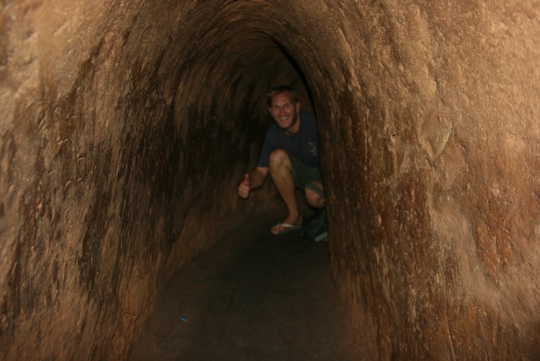
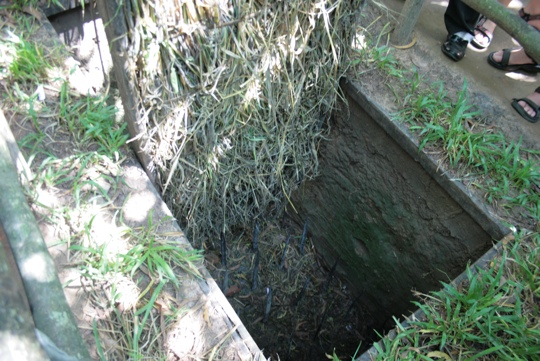
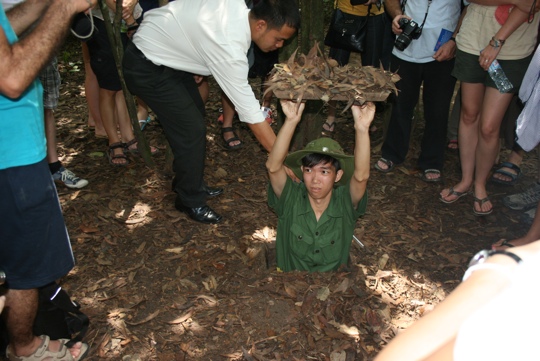
Part of the tour gives you the chance to go down the tunnels which was an experience I wanted to have but wasn’t something that I was necessarily looking forward to as I don’t exactly love being in confined spaces. We had a plan to go down the tunnel right at the front of our group to try to limit the chance of having a fat American backside in our face (thanks for the tip Rob) but sadly there were so many tourists there that no gap ever really open up. With a deep breath though and the Bolt holding back the hordes I headed down into the dark and I genuinely cannot believe that people lived and fought down these little rabbit holes. The entrance had to be opened up to allow our large white selves access – you can see in one of the pictures below how they used to access the tunnels back in the day – and you have to crouch/crawl your way through. They had put in multiple exits at 15m, 30m and up to 120m but I was done at 30 – enough for a taste and to realise I would have been no use down there.
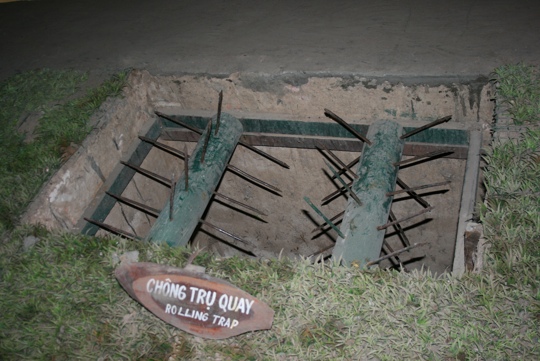
Daily life as well as fighting took place in the tunnels and they had to be constructed to support this. Complex ventilation was built in with air shafts made to look like termite mounds on the surface. Cooking was only done in the morning when mist lay on the ground, so that the smoke from the cooking fires could be camouflaged. Tunnels were built down to the Saigon river so that people could bathe and also enter and exit undetected. Of course the tunnels were also boobytrapped to deal with the cases where they were discovered by the Southern army and the way that they used simple materials like bamboo to construct quite frightening traps was something to behold.
Definitely worth seeing but I was ready for some slightly more upbeat traveling for a while, so thankfully our next stop was the lovely town of Hoi An.

From Pnomh Penh we headed to Ho Chi Minh City, otherwise known as Saigon and unknowingly took our lives in our hands. HCMC is a city of 7 million people and every single one of them seems to own a scooter and drive around at high speed without a care in the world for signaling, road markings, other vehicles or pedestrians on the road. They must have had a surplus of white paint when they laid the roads because I can’t see any other reason that they have pedestrian crossings, nobody takes a blind bit of notice of them.
Rules for driving in HCMC (or any other major Asian city):
– Drive on the road, unless of course there’s too much traffic, in which case drive on the pavement and honk your horn.
– Drive on the right, unless of course that doesn’t suit you, in which case just drive on the left and honk your horn.
– Red light, green light, it’s all the same. Make a gap, punch it and honk your horn.
– There’s always a gap, don’t stop under any circumstances and it’ll definitely open up for you, especially if you honk your horn.
– A scooter is a great family vehicle. Three kids and two parents on the school run? No problem.
– Raining or too sunny? Use one hand to drive the scooter (make sure its the horn honking hand) and the other to hold an umbrella.
– A scooter is a perfect heavy goods vehicle. Those lengths of lead piping/sacks of rice/gas canisters will be at their destination in a jiffy. Carry them across the scooter and honk your horn.
– Those yellow lights on the side of your scooter that blink on and off when you flick that switch are for decorative purposes only.
– Approaching a four lane roundabout is a great time to text your girlfriend to tell her you miss her. Just make sure your other hand is on the horn.
– HONK. YOUR. HORN.
Rules for walking in HCMC (or any other major Asian city)
– As a pedestrian you are lowest on the transportation evolutionary ladder. Be afraid.
– Get out of the way.
We’ve pretty much confirmed on this trip what we already suspected, we’re not really city people, so while we’re glad we went and experienced it, because you really have to experience an Asian city to believe it, I can’t say it was the highlight of our trip. In the spirit of list making however (which I get from my Dad who has always made lists in tiny indecipherable letters on scraps of paper) here are some other things of note about Saigon:
– Beer is cheeeeap. Like the budgie. The more uncomfortable the seat, the cheaper the beer.
– The buildings here have completely different proportions to those that we’re used to in the West and stand packed together like slices of bread before the cellophane has been undone. Every spare centimetre of space is utilised so don’t blink if you’re looking for a specific address because you’ll soon find you’re miles past it.
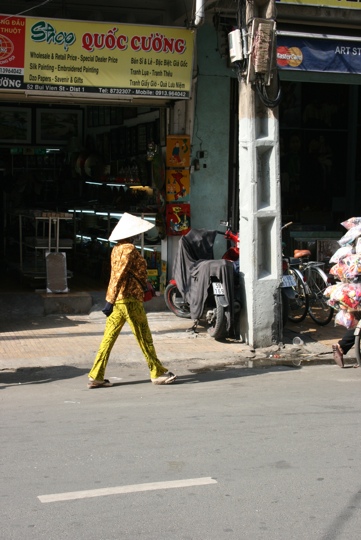
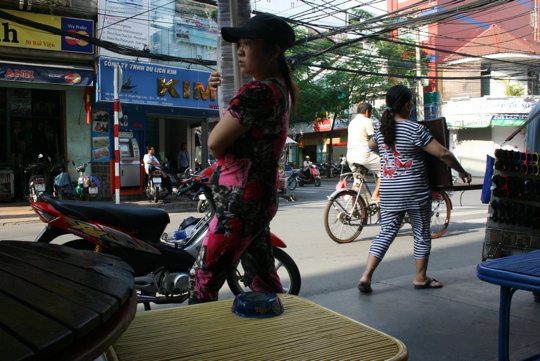
– Vietnamese ladies seem to have a penchant for the floral equivalent of double denim and anything that looks like pajamas. I tried to get some pictures to illustrate the spectacular examples that we saw but I fear I really didn’t do these ladies justice.
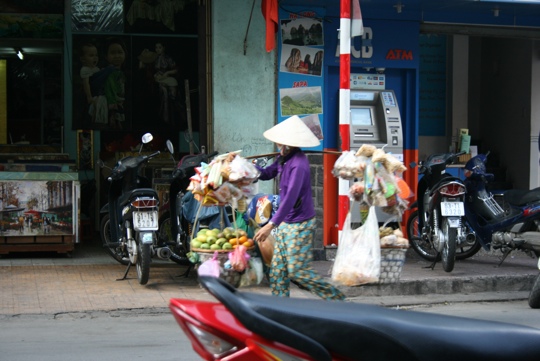
– Pavements do exist in Saigon but they’re largely used for parking scooters, seating for restaurants or roaming street vendors, pushing pedestrians further into the street with the insane drivers.
– The cleaning of flip flops is a serious business. We watched a guy go through about 6 different steps to clean a customer’s flip flops including using polish…
– You thought Notre Dame was in Paris? You fool! I just saw it in Saigon.
We also nearly had our first major disaster of the trip on our journey from Phnom Penh to Saigon which obviously involved crossing the border from Cambodia to Vietnam. I was clearly prepared and knew that you had to have a Vietnamese visa in advance of getting there and so had bought one for each of us back in Canada all those months ago. It was these pieces of paper that I somewhat smugly handed to the driver of our bus to Saigon when we got on. Not so smug when a moment later I was informed that these visas were only valid for entry via an airport and wouldn’t be any use at a land crossing. To this day I don’t understand why you have to have a different visa, but you do and we were unceremoniously turfed off the coach with our bags. Bugger. We were on a schedule and needed to be in Saigon so what the hell were we going to do? Simple as it turns out, all we had to do was give our passports and another $120 to a bus company employee and off he toddled, returning just under an hour later with two new Vietnamese visas and we were on the next bus. Sweet.



From Pakse we said a sad goodbye to both Doro and Mathias and to Laos and flew to Siem Reap in Cambodia which is the staging point for any tours to see the temples of Angkor.
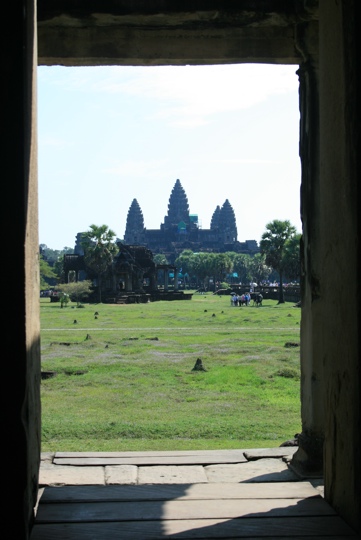
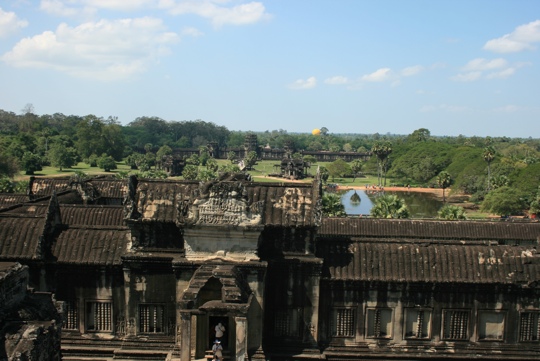
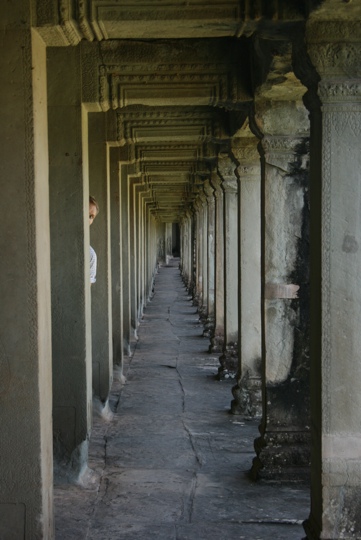
Angkor Wat is the largest religious structure in the world, the epicentre of the Khmers’ civilisation and a source of their fierce national pride. This place is the heart and soul of Cambodia and even makes it onto their national flag. Unlike the other Angkor monuments, it was never abandoned to the elements and has been in virtually continuous use since it was built in the 12th century. This was our first stop on a couple of very intensive days of templing and one for which we decided to have a guide. We were debating this decision an hour after getting out of the car as we hadn’t yet made it through the gates because was still talking! To be fair to the guy though there is obviously a huge amount of history around the construction, carvings and usage of the temples and we definitely got more out of the visit as we could pump him for information.
Angkor Wat was the first place that we’ve really run into the issue of thousands of tourists in one place and we weren’t really ready for it after the relative quiet of Laos. It did detract a little from the Angkor Wat experience to be honest, but you still can’t fail to be in awe of what the Khmers achieved in building such an incredible edifice before any modern construction methods. The sandstone blocks from which Angkor Wat was built were quarried more than 50km away and floated down the river on rafts. The logistics of such an endeavour are just mind blowing. As it’s the most famous temple and has millions of visitors each year there is constant reconstruction going on so it was a challenge to get pictures of the temple that didn’t include scaffolding, or of course thousands of tourists. Thankfully we didn’t find this at all of the temples.
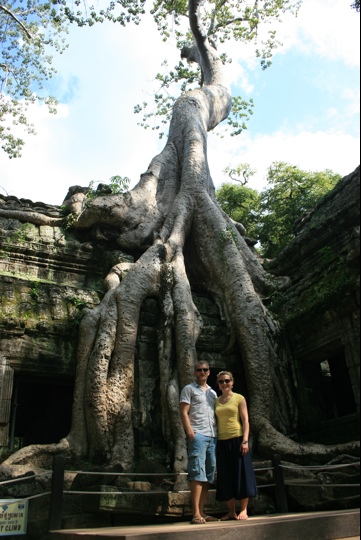
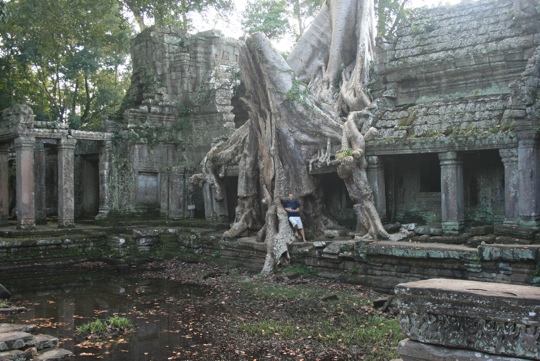
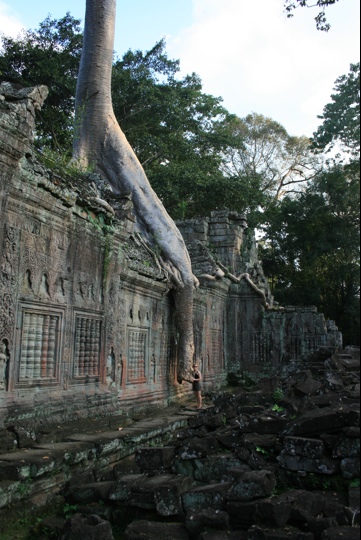
After Angkor Wat we visited Ta Prohm which I think was one of my favorite stops. This temple was again built in the 12th century but is still buried in the jungle, carpeted in moss and strangled in places by tree roots. It’s hardly surprising that it was used as one of the locations for the Tomb Raider film as it’s incredibly evocative and exactly how I imagined these temples to be.
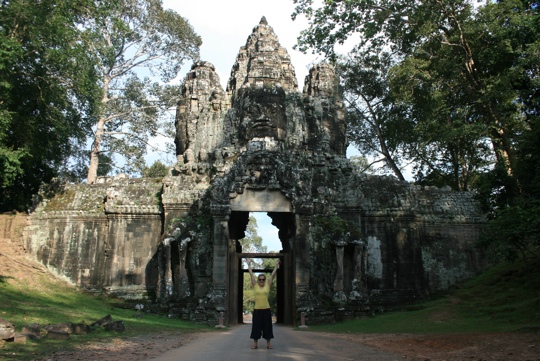
Our final temple of the day was The Bayon in the fortified city of Angkor Thom. At it’s height the city would have had a population of 1,000,000 at a time when London was a small town of 50,000. The houses, public buildings and palaces have long since decayed as they were made of wood because the right to dwell in brick or stone was reserved for the Gods, leaving only extravagant religious structures today. The Bayon itself is breathtaking, decorated with 216 coldly smiling faces of Avalokiteshvara which bear a striking resemblance to the king who built the temple – coincidence?
The following day we went a little further afield and visited Bantay Srei temple which is considered by many to be the jewel in the crown of Angkorian art. Again we encountered huge numbers of large tour groups here so we didn’t linger as long as we might have done, but the temple was definitely worth a visit as the carvings are incredibly intricate and the stone has a pinkish hue that sets it apart from the others.
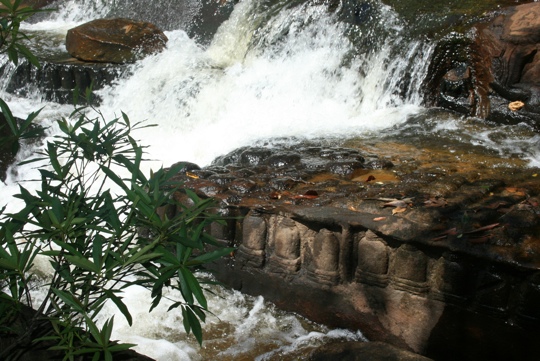
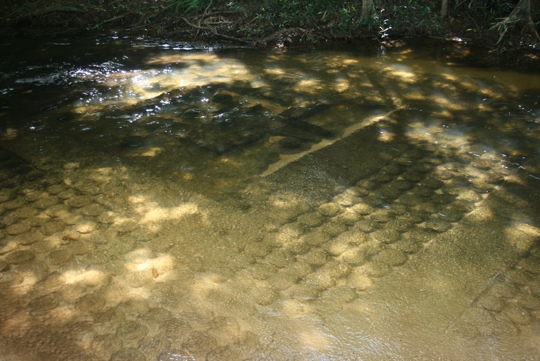
From here we headed to the Kbal Spean which is a carved riverbed about 50km from Angkor set deep into the jungle and is commonly known as the “River of a thousand lingas” – linga being the representation of the male creative energy and the motifs for the stone carvings are mainly myriads of lingams (phallic symbol of Hindu god Shiva). We really enjoyed this visit as there was a 1.5km jungle scramble to get there, it was set deep in the jungle and there weren’t nearly as many tourists presumably because you had to walk more than a few metres from the tour bus to see it.
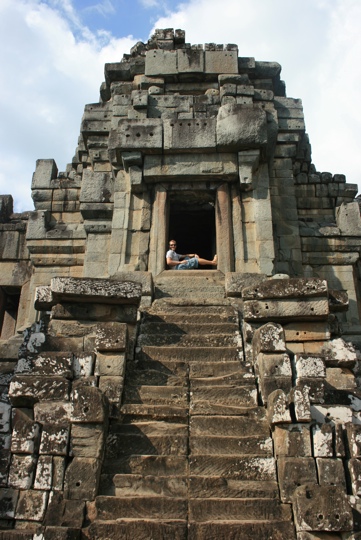
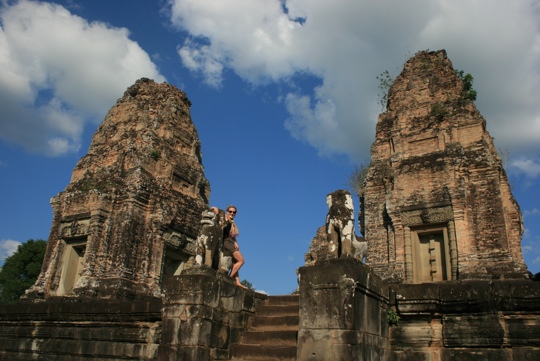
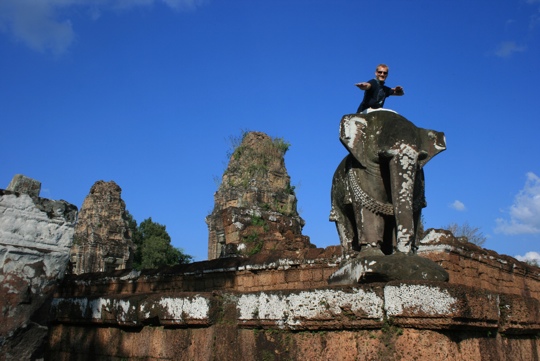
In addition to the major sites above we visited three or four more temples, all of which are incredible in their own right but sadly start to merge into each other after a while. Two and a half days of templing was definitely our limit and then it was time for some chilling out and of course, a massage before heading to Phnom Penh.
Siem Reap itself definitely deserves a mention though, because despite the fact that it seems to more or less exist to service the tourists that flock to Angkor, it has a flavour of its own with old French houses and shady tree-lined boulevards. I really enjoyed being there, especially after the rather characterless Pakse. And for people watching I really haven’t been anywhere like it!
Note: I had to include a photo of one of the religious paintings that we saw at Angkor Wat – you’ll see why below 🙂







With the extra days that we had due to leaving the four thousand islands early we all headed back up to Pakse (Clive, Doro, Mathias and moi) and organised a trip to go and see the Bolaven plateau.
Our guidebook also urged us to stay in Pakse for a few days and we might grow to love it. Hmmm perhaps someone on the Lonely Planet Asia desk is sleeping with the Mayor of Pakse as apart from the amazing $4 massage, we saw nothing to endear the city to us. We did have good Indian food there bizarrely but it really highlighted how you have to accept a different standard of cleanliness in your restaurants and food preparation areas over here. Even the fancy restaurants have people sitting in alleyways chopping veggies and it’s not uncommon to have cobwebs or grungy looking tile/wall in the eating area. They also seem to put the toilet almost in the kitchen in a lot of places which I’m pretty sure contravenes a whole slew of health and safety rules. If you can look past these minor things though the food really is fabulous 🙂
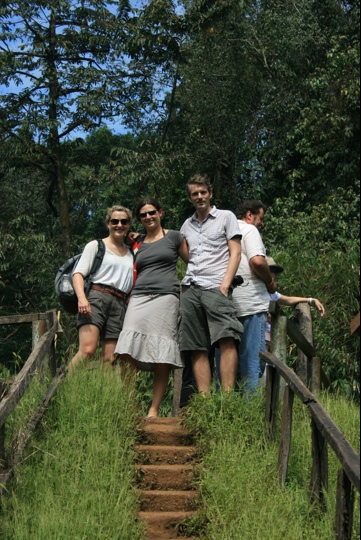
But back to the Bolaven plateau. This area is the principal region where Lao coffee is grown and has been grown since the 19th century when the French were looking to maximize the yield of their colony. We got on a day tour with the Sabaidee2 guesthouse which was just over $20/person and would drop us off at one of their stops and then pick us up with the next tour group the next day – awesome!
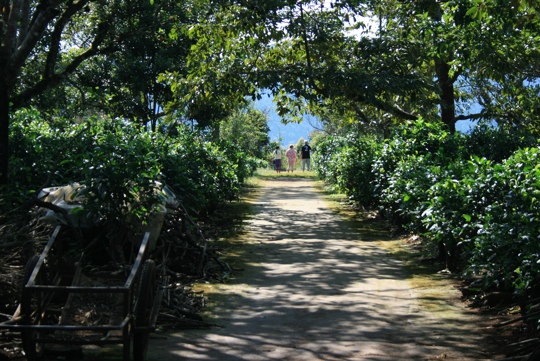
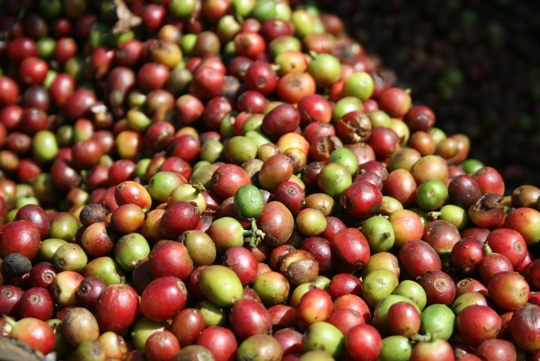
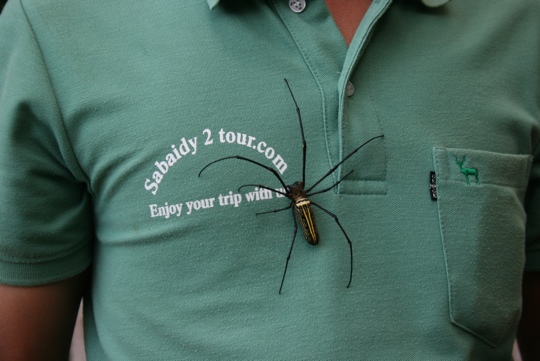
We started off with a visit to a coffee/tea plantation where I learned that all tea (well black, white and green) actually comes from the same plant and it just depends on the leaf and how it’s processed. Well I never 🙂 We also saw the various stages that coffee goes through from the red berries on the trees, to extraction of the seed then washing and drying before finally being roasted. Oh and we caught site of a couple more giant creepycrawlies, one of which our guide chose, I said CHOSE, to take off it’s web and put on himself, who does that??? The picture below is not for the fainthearted. I’m getting the heebie-jeebies just thinking about it.
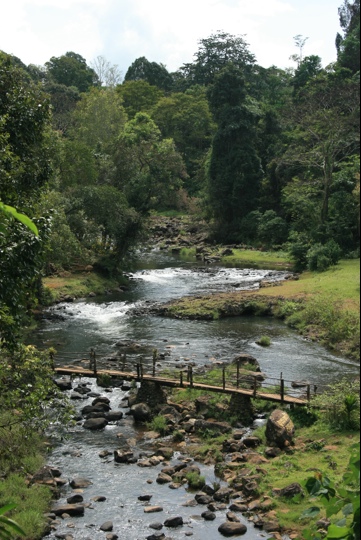
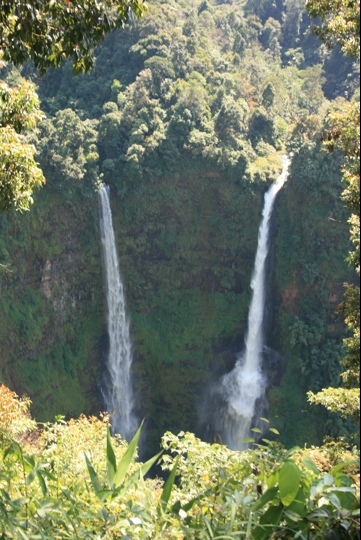
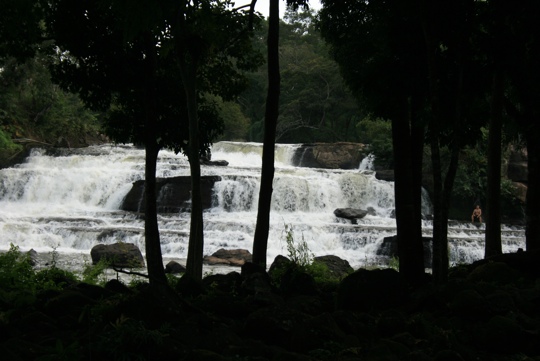
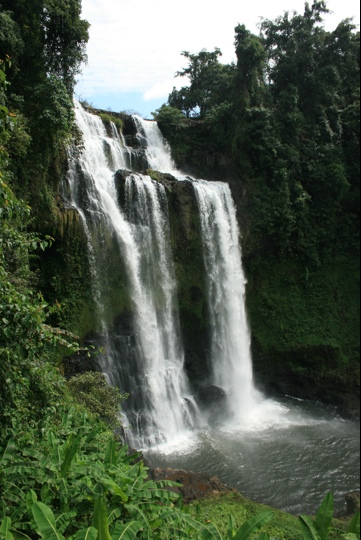
After the plantation and some delicious local green tea it was time for our first waterfall stop. Now we’d been rather disappointed by the waterfalls down in the 4000 islands but not so here. All three that we saw were gorgeous and quite different from each other, preventing the waterfall fatigue from setting in. The surrounding countryside was also far more lush and the verdant greens were a perfect backdrop for the cascades of water.
The other feature of the tour was stopping in to see some local villages. I have to say that I don’t enjoy this kind of thing as it feels a little like going to the zoo. I would be totally up for going to visit if we were going to do something like teach English or get involved in the community somehow, but just going to look at people as they go about their daily lives is quite uncomfortable. The first place we stopped was practically deserted and we just had a look at their spirit house which is where they make sacrifices if someone is ill or in more happy circumstances like a wedding for example. Buffalo are the animals of choice but will cost the village about 4,000,000 Kip (about $500) so it’s a massive deal for the community.
The second village was much bigger and housed about 1000 people. Apparently it’s not uncommon for a couple to have 12 or so kids because of course birth control isn’t exactly readily available and I’m guessing they’re not super keen on abstinence as an alternative. There were (obviously) loads of kids around who loved posing for photographs and then checking out the results and Clive had quite the gaggle of the around him as he was showing them his iPhone, which I failed to get a photograph of I’m afraid. Our guide said that mobile phones are actually really very common even in these rural villages and he would expect them to have Internet in the not too distant future as well. We had noticed as we travelled through Laos that even though people are living in bamboo huts and using wells to get water, or showering in the rain water runoff at the side of the road, they have enormous satellite dishes outside and TV inside, so I guess the Internet is the next logical step?
Our final stop for the day was Tat Lo where we’d decided to spend the night. After dropping our bags we rendezvous’d in the bar with ze Germans and introduced them to that king of all card games, shithead. Excuse my French. We soon had them addicted and exclaiming “Oh dear it’s getting a bit whiffy over there” like old pros. We even used the game as a language learning opportunity, though how useful the word Scheißekopf is going to be to us when we go to Germany I’m not sure 😉
Quick note – if you look closely in one of the waterfall pics you’ll see Clive sitting on a rock right in the middle at the bottom of the falls after he’d seen a local doing just that – never to be outdone!





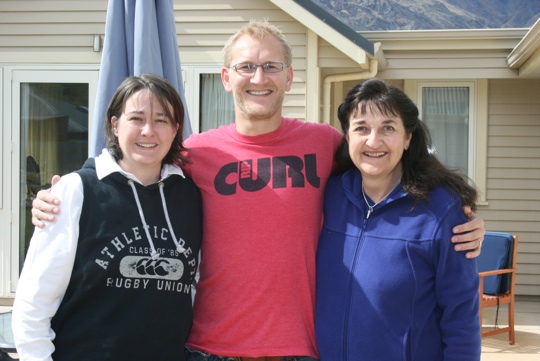
Straight from the mountain that fell on our heads, we headed on to Queenstown, the adventure capital of New Zealand, if not the world. But rather than throwing ourselves off bungy bridges we were really here to catch up with my family, Winks my Aunt (freshly returned from attending the wedding) and cousins Sam and Emma whom I haven’t seen for probably nearly ten years.
Queenstown itself is a busy little town full of bars, sports shops and tour operators set in a magnificent setting on the shore of Lake Wakatipu, surrounded by beautiful jagged mountains. It reminded us very much of Vancouver although we were told the climate is a lot drier!
Unfortunately, the timing of our arrival was not good as Sam along with husband Jeremaia and their two highly energetic beautiful little girls (Gwinnie and Ali) were in the middle of moving house so we played our small part in bringing over their dog basket before enjoying a curry take-out and some beers to celebrate the move. It was a real joy to see them all again although sadly we missed Emma’s new wife Amelia by a day as she had to head back to Dunedin.
The next day we headed into Queenstown and did the short 40min hike to the peak of Queenstown where they have a hilarious family-orientated concrete luge track with plastic carts served by a small chair lift. Suffice to say Jo and I signed up and spent a good half hour banging wheels and bumpers as we raced each other side by side down the short twisty track- Jo even showed that despite our recent nuptials her competitive spirit was not dampened and she duly put me into the wall on one corner!
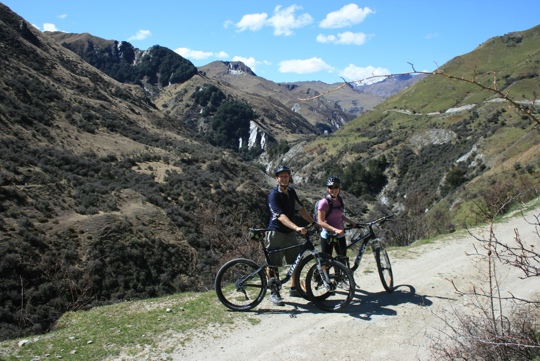
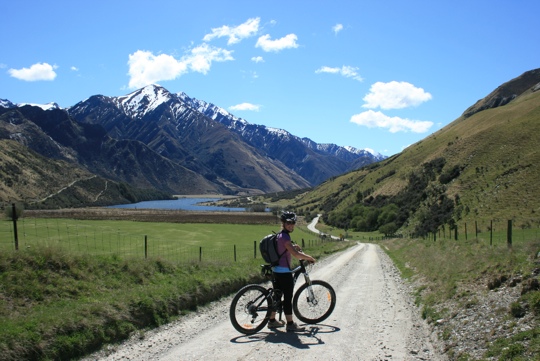
Now, being in the mountains I was keen to get some mountain biking in so we rented some dual suspension XC bikes and headed out on the Moonlight track in the blistering heat – to do a 25km loop through some incredible scenery, following streams and goat tracks, at times even carrying our bikes over boggy wetland sections before eventually leading up to a mountain pass with epic views and some hairy looking drop-offs into the gorge below. What started out as easy double-track ended up being not quite the riding trail I was hoping for as the so-called single track was virtually unrideable and turned into hike-a-bike in places and clearly hadn’t been built or maintained for biking. This dampened our spirits a little but overall being out in the New Zealand backcountry and with the stunning vistas it was worth getting out of town for and putting in the effort. We will be back to get some proper biking in!
Of course, we still had the rugby going on and we piled round to Sam and Jeremaia’s
for the NZ v Austrailia 1/4 final match. I should mention at this point that Jeremaia is a typical kiwi bloke – he loves sheep, shandy and rugby but not as much as he loves sledging the English and we had some good banter going although given the shocking performance of our team there was only so much I was prepared to stand up for them. The mood turned immediately serious once the game kicked off and we settled in to watch what was probably one of the matches of the tournament, the tension was palpable not just in the house, but across the whole nation as this was what was likely to be the last big test for the All Blacks before supposedly cruising to an easy win against the French in the final (how wrong that turned out to be!) It was an epic match, but the ABs won it convincingly and dominated the loose and defended with a desperate but assured vigour to play themselves into the final and a shot at their first world cup for 24 years. Jeremiah was emotional but then he is a sensitive soul.
I have to say a big thanks to Winks for putting us up and feeding us some delicious home cooked meals for 4 days and also being so welcoming when after dropping us at the airport we called her 2 hours later to ask if we could stay another night after all flights were cancelled due to the high winds that day. She apologized on the way home as she’d already put our bedsheets through the wash and would we mind fresh ones! That’s efficiency that would put some Swedes I know to shame…..
Post Script:
Now for a little shameless plug – Jeremaia runs South Island Guides and as such plays around in the mountains quite a bit as a mountain guide pretending to work while putting together bespoke luxury holidays for the likes of Larry Page (founder of Oracle and one of the richest men in the world) and Peter Jackson of Lord of the Rings fame. Most of these involve helicoptors, very remote mountain lodges, glacier treks, kite-surfing in deserted fjords, back country ski-touring, heli-skiing etc. If you can even dream of an adventure in the mountains Jeremiah can make it happen for you (for the right price!) so if you ever find yourself in New Zealand and want an unforgettable mountain experience check out :
http://www.southislandguides.com and his partner company http://www.exclusivelynz.com.


The Si Phan Don area in Southern Laos is where the Mekong is at it’s widest and home to an archipelago of sandbars and rocky islets – the four thousand islands. The guidebook waxed lyrical about this area describing how the islands were set amongst the turquoise expanse of the Mekong where at night the river is dotted with the lights of fishing boats, while during the wet season, the lush palm studded islands are alight with fireflies and there’s a steady flow of long tail boats gliding past bathing water buffalo. Sounds pretty great n’est ce pas? Well I should have trusted my instincts as I did wonder how the Mekong that we knew, brown and turgid, could turn into the turquoise expanse that the Lonely Planet was harping on about. Turns out it can’t. Actually, that’s a lie, it can, but only for a short time in February. Huh.
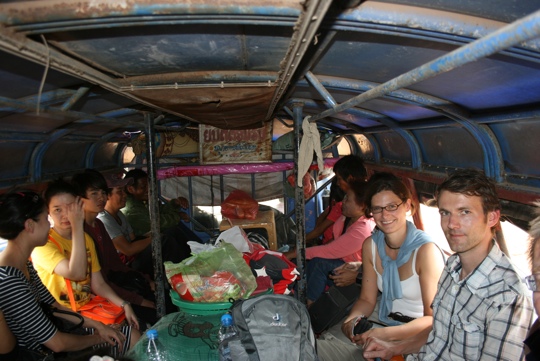
Fortunately for us, at the airport in Pakse we bumped into a German couple who had been on our boat from Nong Khiaw. This time we all introduced ourselves and it turned out that Doro and Mathias were also heading for Si Phan Don. We grabbed a taxi with them to the bus terminal in Pakse where we were loaded into an open sided lorry along with bags of rice, suitcases, boxes, far more people than safe, oh yes, and a moped, for the 3 hour trip further south.
Our new friends were equally as disillusioned as we were with Don Khong where we ended up, so after checking in to a guest house we resolved to book the one day tour of the area for the following day and then got merrily drunk at a riverside bar. 17 large beers later at the ungodly hour of 11pm (yes, 11pm!!) we were politely asked to leave as lights were turned out around us. I blame the German influence for this behaviour (hi Doro and Mops!).
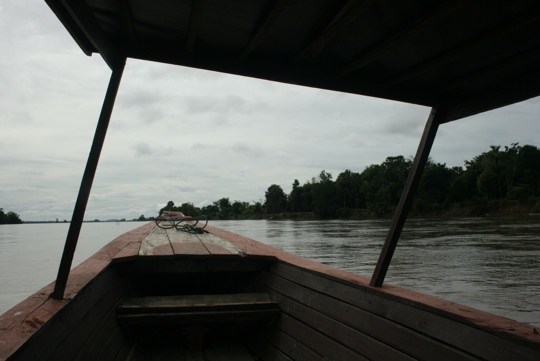
The tour the next day was a little mixed – it was interesting to be out on the boat in amongst the islands, put-put-putting along in our wooden boat and slowing down even further into the island rhythm. We went to see a couple of waterfalls, the second of which is apparently the largest one in SE Asia by volume but was a bit of a disappointment. We did however manage to tick yet another endangered species off our list as we went to see the very rare fresh water Irrawaddy dolphin right on the border with Cambodia. There are only 5 pods of these dolphins in the world and about 70 adults where we were. The locals revere the dolphins because they believe that they save them from crocodiles. This is good for the dolphins as it means that the otherwise omnivorous locals won’t eat them.
We finished the day with dinner back where we were staying and found ourselves at 9.20pm having to beg for kitchens to be reopened so that we could have a final beer and dessert. I’m pretty sure that the island was happy to see us leave!


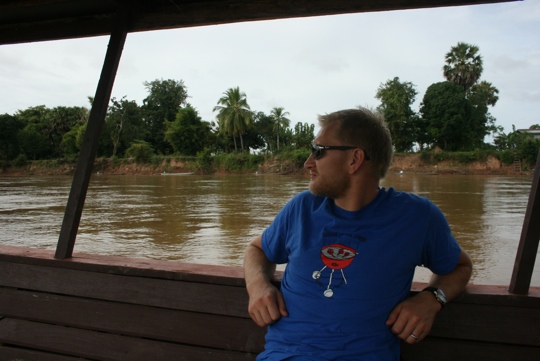

Clive will update on our jungle experience swinging through the trees, but in the meantime…
We had originally planned to head to Luang Nam Tha after the Gibbon experience to do some trekking in the national park up there but after our days of Tarzan and Jane which had involved a fair amount of walking we didn’t really feel like heading back out into the jungle for more of the same. Our clothes could also pretty much get up and walk themselves at this point so we didn’t think it would be fair to inflict that on our fellow travelers.
We still headed to Luang Nam Tha for one night which meant that the Gibbon folks dropped us and our bags in a small grocers at the side of the road about 90 minutes outside Huay Xai. We were told that there “should” be a bus at 1pm or 2pm that we could flag down. Now, I like trains because you know where you are with a train. When you pull into a station the train will stop each time whether anyone gets on or not, there will be signs that inform you of the station name and there is usually an announcement. Buses don’t have the same reliable nature. They’ll only stop if you request it, they didn’t until recently tell you where you were and weren’t as predictable. Now, imagine how I felt as our new Gibbon experience friends disappeared towards Huay Xai in our jeeps and left us at the side of the road where nobody speaks English for a bus that “should” be along soon.
We had given up on the bus arriving by 3.30pm and had decided to flag down anything going in the right direction whether it was an oil tanker, a lorry or a personal vehicle. Just then out of the distance appeared a minibus. Saved! Clive ran into the road to flag it down but the smiling driver informed us that he was full and there “should” be another along in a while. Maybe at 2pm – but isn’t it already 3.30pm? That was just met with more grinning. Marvelous.
We weren’t having much luck flagging things down when another larger bus appeared that this time stopped and actually let us on (only 3 hours later than scheduled) and put our bags in the hold on top of what looked like a piece of engine. That is exactly what it was as it turns out. We got talking to the only other foreigners on the bus after we stopped and they told us that the piece was from the original bus which had broken down. I guess we were lucky to get to Luang Nam Tha at all.
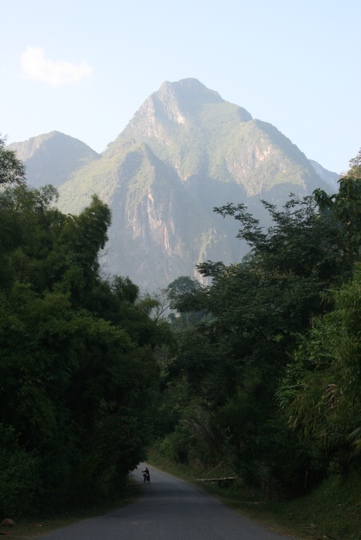
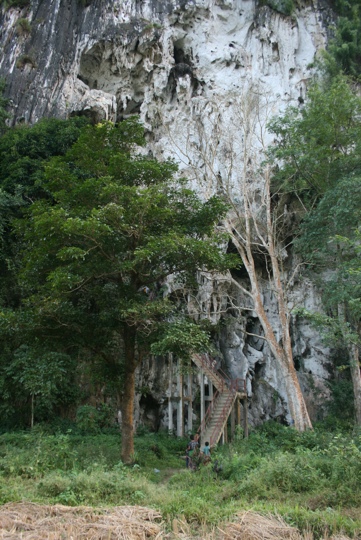
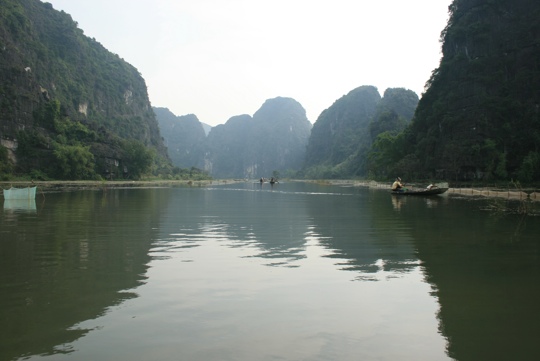
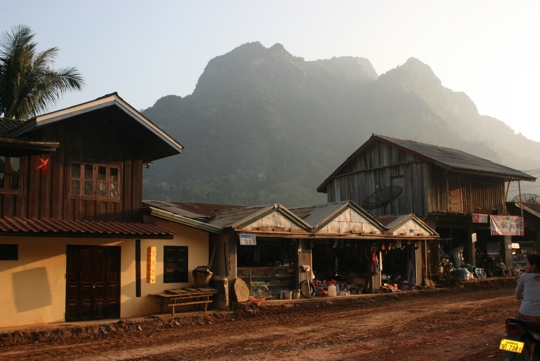
After deciding not to stop there our destination was now Nong Khiaw, a small village on the Mekong river. The scenery around the village is unbelievable with soaring limestone karsts exploding from the river valley. While here we spent a good deal of time just soaking up the atmosphere and catching up on some blogging, emails etc on a surprisingly good Internet connection. We also walked out of town to visit the Tham Pha Tok caves in the limestone cliffs where then locals had hidden out during the second Indochina War. They had been in the caves for so long that there are areas set out specifically for the officials, police etc so that they could keep their society running.
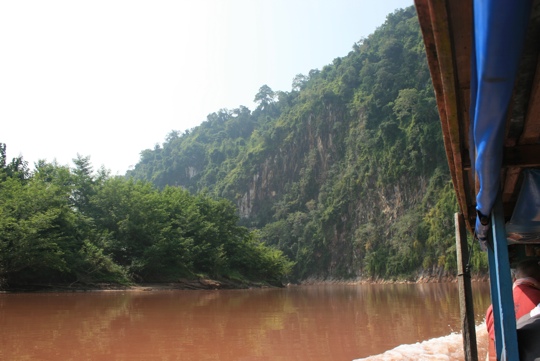
We finished our time up North by traveling back to Luang Prabang by boat down the Mekong. Not the most comfortable journey I’ve ever undertaken, but the scenery is something else.
































 boltsintotheblue